We've Been Quoted In:



Search visibility has always evolved. First, it was directories. Then websites. Then organic rankings. Then Google Maps. Now, AI-generated answers shape decisions before users scroll to the Map Pack and organic listings.
People are asking:
“Who is the best contractor near me?”
“Recommend a trusted dentist in my area.”
“What marketing agency should I hire in {my city}?”
AI platforms generate curated answers. They summarize. They recommend. They filter.
If your brand is not structured for inclusion, it will not appear.
Google AI Overviews are already reducing clicks to traditional organic listings. In many local searches, recommended businesses appear inside AI-generated summaries before users ever scroll to ads or the Map Pack.
The advantage right now is that the field is still forming. Authority signals, structured data, entity clarity, and brand references are not yet fully consolidated.
That will change.
Businesses that establish AI search visibility early gain disproportionate trust. When a brand appears in AI answers, organic search, and Google Maps simultaneously, it signals authority.
We have been actively testing Generative Engine Optimization strategies across multiple industries. We track citation frequency, entity reinforcement, content structuring, and AI answer inclusion patterns.
AI visibility is not luck. It is engineered.
For over 13 years, Radiant Elephant has been a leading Web Design and SEO Agency focusing on high-conversion web design and development, revenue-driven SEO strategy, and digital advertising.
Founded by Gabriel, a 3rd-generation entrepreneur, with a mission to help businesses large and small achieve financial security by increasing conversions, awareness, and search rank.
We won't give away all the secrets to increasing AI visibility, but here are a few factors and strategies we utilize.
A US-based B2B manufacturing company has been an SEO client of ours for 4 years. Seeing the tides change and the growing importance of AI search visibility, we shifted some of our work into AI SEO to help them gain traction in LLMs. This business is a bit of an underdog. They compete in 5 different verticals. Each vertical has 3-5 main competitors that focus only on that vertical, and they all have stronger brand awareness and much larger marketing budgets. The goal was to leverage advanced generative engine optimization strategies to help them achieve market share in AI searches early on to establish themselves.
After 8 months of hard work, this company is seeing impressive increases in AI mentions for over 200 prompts we are tracking. In Google AI Mode and Google AI Overview, the work we did resulted in this brand outranking the FDA website and 2 Fortune 100 companies for terms relating to one of the verticals.






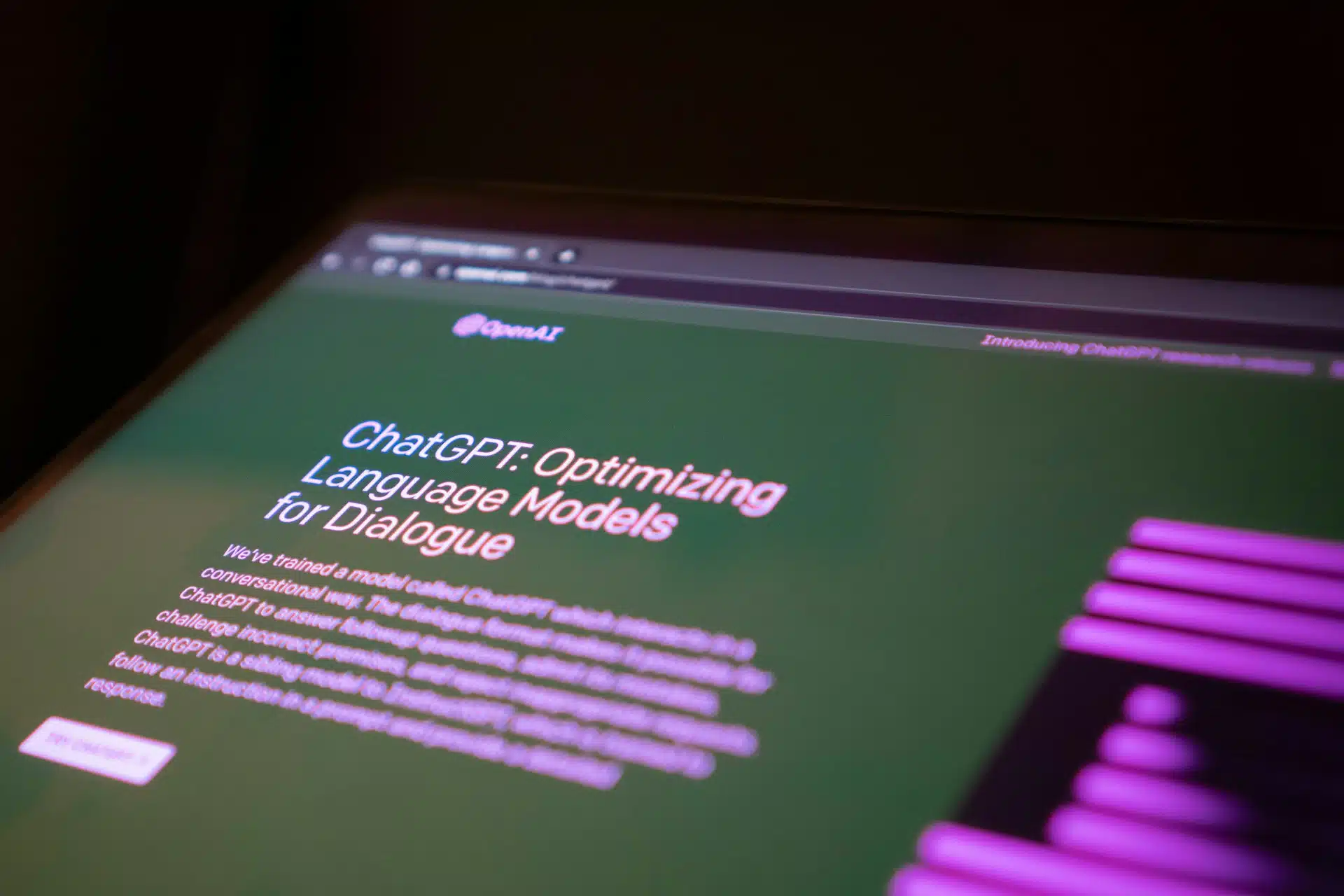


Generative Engine Optimization (GEO) is the practice of optimizing your content so AI-powered search engines like ChatGPT, Google AI Overviews, Perplexity, Claude, and Gemini cite your business when answering user questions.
Unlike traditional SEO (which gets you ranked in a list of blue links), AI SEO gets you featured directly in AI-generated answers.
When someone asks ChatGPT, "What's the best web design agency in Massachusetts?" or Google AI Overviews, "How to choose a digital marketing company?," GEO ensures your business is mentioned in that response. It's not about ranking anymore. It's about being the source AI trusts and references.
Because search behavior is fundamentally changing. Over 60% of Google searches now show AI-generated overviews at the top, and millions of people are using ChatGPT, Perplexity, and other AI tools instead of traditional search engines.
If your business isn't optimized for these platforms, you're invisible to a massive (and growing) segment of potential customers. Our clients that are early adopters are already seeing 30-40% increases in brand mentions and qualified traffic from AI sources.
The businesses that optimize for GEO now will dominate their markets while competitors scramble to catch up. This isn't future-proofing, this is present-day reality. Users are already searching with AI, and if you're not there, your competitors will be.
Traditional SEO optimizes for rankings in search results; you want position #1 on Google's page. GEO optimizes for being cited and referenced by AI when it generates answers.
SEO focuses on keywords, backlinks, and page authority. AI SEO focuses on content clarity, factual accuracy, authoritative sources, statistics, quotations, and structured data that AI can easily understand and extract.
Here's the key difference: with SEO, users click your link and visit your site. With GEO, AI pulls your information and presents it directly in the answer. You might not get the click, but you get the brand visibility and authority. Both are essential.
SEO isn't dead, but GEO is the new frontier. You need both strategies working together to dominate search in 2025 and beyond.
GEO targets all major AI-powered search platforms: Google AI Overviews (formerly SGE - Search Generative Experience), ChatGPT, Perplexity, Claude, Google Gemini, Microsoft Copilot, and Apple's integrated AI search in Safari.
Each platform pulls information differently. Some use real-time web data, others rely on training data, and many use hybrid approaches. We optimize your content to be cited across all these platforms because your potential customers are using all of them.
The goal isn't just visibility on one AI engine. It's comprehensive coverage across the entire AI search ecosystem.
Generative Engine Optimization results vary by platform and approach. For AI engines that crawl the web in real-time (like Perplexity and Google AI Overviews), you can see your content being cited within 2-4 weeks of optimization.
For platforms that rely more on training data (like ChatGPT), it takes longer. Typically 2-6 months as your authority and digital footprint build up.
The key is that AI SEO is a long-term brand-building strategy, not a quick hack. You're establishing your business as the authoritative source in your industry, so AI consistently references you.
We typically see measurable increases in AI citations and brand mentions within 60-90 days, with significant visibility gains by month 6. Unlike paid ads that stop when you stop paying, GEO builds compounding authority over time.
Yes, and we track it meticulously. We use specialized tools that monitor how often your brand appears in AI-generated responses across different platforms, track sentiment and context of mentions, measure "share of voice" compared to competitors, and identify which content gets cited most frequently.
We also track traditional metrics like branded search traffic, referral traffic from AI platforms, and conversion rates from AI-sourced visitors. You get monthly reports showing: how many times AI engines mentioned your brand, which queries triggered your citations, your visibility compared to competitors, and trending topics where you're gaining or losing ground.
Unlike traditional SEO, where you track rankings, GEO tracks "reference rates". This is how often AI chooses you as a trusted source.
GEO and SEO work together. You need both. Traditional SEO is still critical for ranking in standard Google searches, driving direct website traffic, and local visibility in Google Maps.
GEO extends your reach into AI-powered search, where users get direct answers without clicking links.
Think of it this way: SEO captures people who want to browse options and click websites.
GEO captures people who want instant answers from AI.
The overlap is significant. Many AI SEO best practices (authoritative content, clear structure, citations, expertise) also benefit traditional SEO.
Our approach integrates both strategies so you dominate across all search modalities. We're not abandoning SEO, we're evolving it to include the AI-powered future that's already here.
GEO-optimized content is clear, factual, and AI-friendly.
Key elements include:
Research shows content with added statistics improves AI visibility by up to 40%, quotations increase citation rates by 30%, and structured, readable content gets referenced 25% more often.
We don't just write content. We engineer it for AI comprehension and citation.
Generative Engine Optimization services start at $2,500/month and include:
GEO is more expensive than basic SEO because it requires specialized expertise. This is cutting-edge digital marketing and SEO that most agencies don't even understand yet.
But early adopters are seeing 3-5x ROI as they capture market share in AI-powered search before competitors catch on.
We also offer AI SEO audits starting at $1,500 if you want to understand your current AI visibility before committing to ongoing optimization.
It's already late. AI-powered search isn't coming. It's already here.
Google AI Overviews appear in over 60% of searches.
ChatGPT has 200+ million weekly users.
Perplexity is handling millions of queries daily.
Your potential customers are using these tools right now, and if your business isn't optimized for them, you're invisible. The businesses investing in Generative Engine Optimization to increase their AI visibility today are establishing authority that will be incredibly difficult for late adopters to overcome.
AI learns from the sources it sees repeatedly. Early visibility compounds over time. In 6-12 months, when every business is scrambling for GEO, the cost will be higher and the competition fiercer.
The question isn't "should I do GEO?", it's "can I afford to wait while my competitors don't?" First-mover advantage is real in GEO, and the window is closing fast.
Click the button to schedule your free discovery call. This call is typically about 20-30 minutes long. This is not a sales call. This is a call to learn about your business goals and challenges to see if we are a good fit.