How to Rank Your Business in Google Maps
Written by Gabriel Bertolo
June 15, 2026

Google determines your placement in the Local Map Pack based on three factors: relevance, distance, and prominence. That hasn’t changed. What has changed is how much weight each signal carries, what “prominence” actually means in 2026, and how AI search platforms are now factoring into the equation.
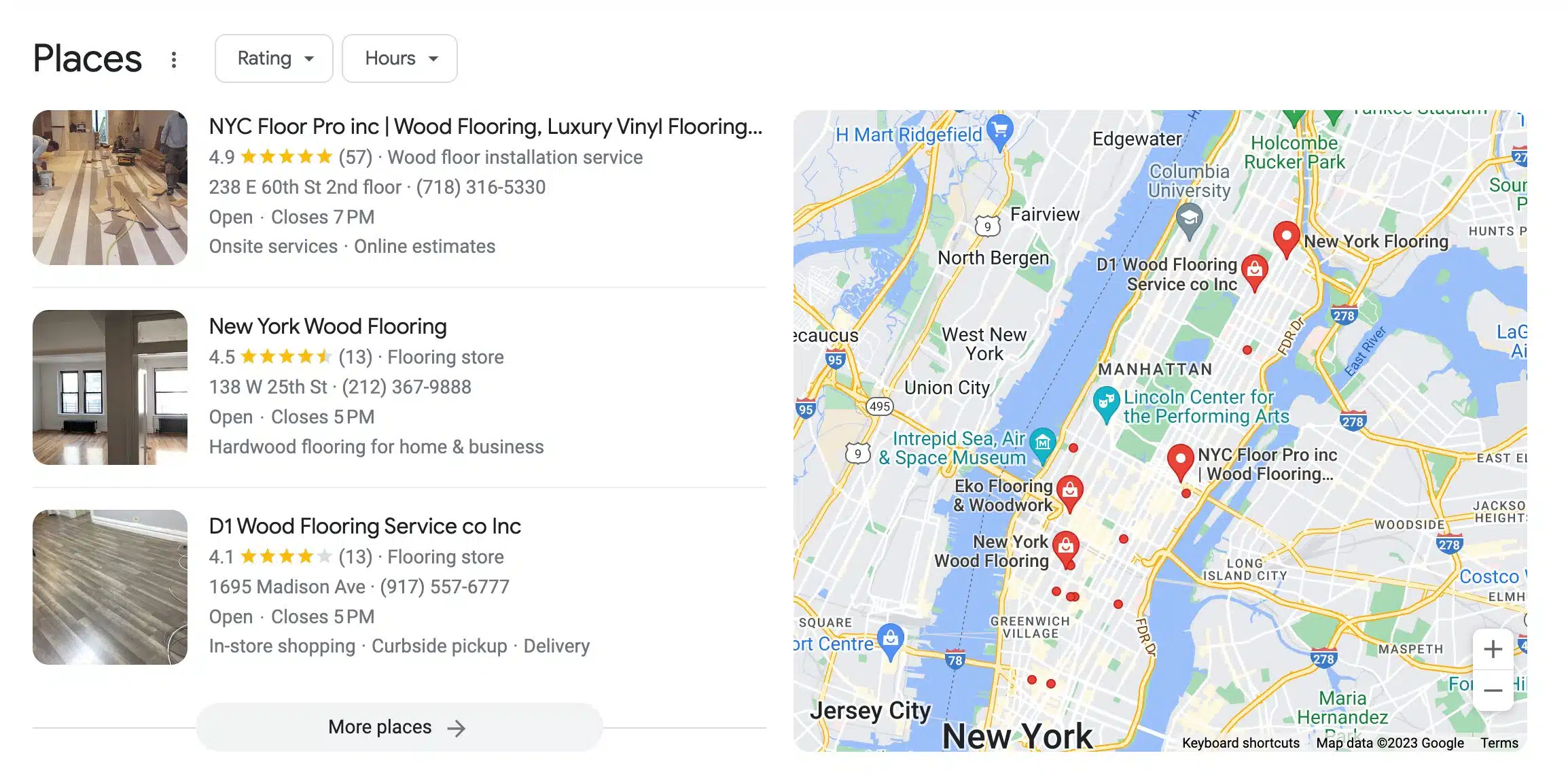
According to the Whitespark 2026 Local Search Ranking Factors survey, Google Business Profile signals account for 32% of Local Pack and Maps ranking factors. Eight of the top ten ranking signals come directly from GBP itself. Source: Whitespark
No other single channel concentrates that much ranking power. Your Google Business Profile isn’t just a listing. It’s the primary data source Google uses to determine whether your business appears in the Map Pack at all.
And yet 11.1% of Google Business Profiles are still unclaimed. Source: Starfish Reviews
That’s businesses leaving the most important local SEO asset they have completely unmanaged. If yours isn’t claimed, stop reading and go claim it. Everything in this article is pointless without that step.
I’ve been optimizing Google Business Profiles and local SEO for over 13 years. I’ve helped businesses across Massachusetts and New Jersey climb into the Map Pack and stay there. What follows is what actually works, not the generic advice you’ve read on every other SEO blog.
The Google Local Map Pack is the set of three business listings that appear at the top of search results when someone searches with local intent. It shows up above the organic results, with a map, reviews, business hours, and click-to-call buttons.
46% of all Google searches have local intent, and 42% of local searchers click on results inside the Google Map Pack. Source: Backlinko
For Medical Spas, dentists, Cannabis Dispensaries, Architects, and Therapists, the Map Pack functions as the storefront window. A huge portion of searchers never scroll past it. They see three options: check the reviews, and pick up the phone. If your business isn’t one of those three, most local searchers will never know you exist.
There’s a psychological element too. People assume the businesses Google surfaces in the Map Pack have been vetted. That’s not exactly how it works, but the perception alone gives those three spots an authority advantage that organic results below them can’t match.
76% of consumers who conduct a “near me” or local search on a smartphone visit a business within 24 hours, and 28% of those searches result in a purchase. Source: Google / Think with Google
I’ve seen this play out firsthand. When we took on a dental practice client in New Jersey, they had 27 Google reviews and were nowhere near the Map Pack for competitive terms in their area. Six months later, through a structured review strategy and full GBP optimization, they had over 145 reviews and were consistently appearing in the top three. Their call volume from Google Maps increased substantially. Same office. Same services. Same location. The difference was the GBP.
This surprises a lot of people. According to the Whitespark 2026 report, your primary category selection is the most influential individual ranking factor for the Local Pack. Not reviews. Not links. Your category.
And it’s the one thing most businesses get wrong.
Google offers over 4,000 category options. Your primary category should be the most specific, accurate description of what your business does. Not the broadest option. Not the one with the least competition. The one that actually matches what searchers are looking for.
A restaurant that primarily serves Italian food should use “Italian Restaurant” as the primary category, not “Restaurant.” A dentist who specializes in cosmetic dentistry should use “Cosmetic Dentist” if that’s what patients search for, not just “Dentist.”
Secondary categories matter too. You can add multiple secondary categories to cover additional services. Look at what your Map Pack competitors are using. Tools like Pleper or GMB Spy (a Chrome extension) let you see the exact categories your competitors have selected.
I always audit category selection first when a new local client comes on board. It’s the fastest, simplest change that can produce the biggest results.
Filling out your GBP completely isn’t enough. The optimization needs to be strategic. Here’s what matters and how to do it at a level that goes beyond checking boxes.
You get 750 characters. Most businesses either leave this blank or write something generic like “We are a family-owned business dedicated to providing excellent service.” That tells Google nothing useful.
Your description should include your primary services, the specific areas you serve, and natural keyword variations. For our Northampton SEO office, I’d write something that mentions Western Massachusetts, the Pioneer Valley, and specific towns in Hampshire County. Not because I’m keyword stuffing. Because geographic specificity helps Google understand exactly where I operate and what searches to match me with. If you are a Boston business looking to increase your Boston search presence, then use the term Boston, but also the specific areas in Boston, like Beacon Hill, Brookline, etc.
Write it for the customer first. But make sure Google can extract the signals it needs.
Your business Name, Address, and Phone Number must be identical everywhere. And I mean identical. If your Google Business Profile says “35 State Street” but a directory listing says “35 State St.” that inconsistency can fragment your entity signals.
This sounds trivial. It isn’t. NAP consistency is how search engines confirm that mentions of your business across the web all refer to the same entity. When signals conflict, Google’s confidence in your entity drops. And lower confidence means lower Map Pack placement.
Use a tool like BrightLocal to audit your existing citations and find inconsistencies. Fix every one of them. Then make sure all future listings match exactly.
Businesses with more than 100 photos on their GBP receive 520% more calls and 2,717% more direction requests than the average business, according to BrightLocal data. Those are real numbers.
But the type of photos matters. Skip stock images. Google can identify them, and they do nothing for trust. Upload real photos of your team, your office or storefront (interior and exterior), your work, and your products. For service businesses, before-and-after photos are incredibly effective.
Go a step further. Geo-tag your images before uploading. This embeds your business location coordinates into the image metadata, giving Google another geographic signal. You can geo-tag images for free using tools like GeoImgr.
If you have the budget, hire a photographer to create a 360-degree virtual tour of your location. Google gives visual preference to businesses with immersive imagery.
I’m surprised by how often I see empty or barely filled Services sections during audits. Google gives you a structured way to declare exactly what you offer, with individual entries and descriptions for each service, and most businesses don’t bother.
The difference between listing “Plumbing” as a single service versus breaking it into drain cleaning, water heater installation, sump pump repair, emergency plumbing, and leak detection is the difference between a vague signal and a precise one. Each entry gets its own description. Each description is an opportunity to include natural keyword variations that help Google match your listing to specific queries someone might type at 2 AM when their basement is flooding. That specificity is what separates businesses that show up for “emergency plumber near me” from businesses that only appear for the generic “plumber” query.
Here’s something that catches business owners off guard. The Q&A section on your GBP is public. Anyone can ask a question, and anyone can answer it. I’ve seen competitors post misleading answers. I’ve seen random users give completely wrong information about a business’s hours or services. If you’re not monitoring this, your reputation is partially in the hands of strangers.
The smart play is to seed your Q&A proactively. Think about what your customers ask before they hire you. Do you offer emergency service? What insurance do you accept? What’s your service area? How far in advance should they book? Post those questions yourself and provide thorough answers. This isn’t gaming the system. It’s preempting misinformation with accuracy. And the geographic and service keywords that naturally appear in your answers give Google additional context about what you do and where you do it.
Reviews are one of the top three Map Pack ranking factors according to every major study. But it’s not just about having reviews. It’s about the pattern.
Yext’s 2026 study found that businesses with consistent owner responses outranked businesses with similar review counts but no replies. The response itself is a ranking signal. Source: Yext
And recency matters enormously. Yext’s data also showed that in food and dining specifically, reviews younger than two weeks had the strongest visibility impact. A pile of old reviews doesn’t carry the same weight as a steady, recent flow.
Here’s what a real review strategy looks like. For a dental practice client, I implemented a two-touch approach: a weekly email to patients who had appointments that week, followed by a text message requesting a Google review the day after their visit. Simple. Consistent. Not aggressive enough to annoy anyone, but persistent enough to generate results.
We took them from 27 reviews to over 145 in six months. And this wasn’t some high-volume practice. It was a mid-sized office with a normal patient volume. The strategy was the difference.
In the review responses, I used natural local keyword variations. Something like “Thank you for trusting us as your Northampton family dentist” or “We appreciate you choosing us for your dental care in Hampshire County.” These responses add geographic and service-related keyword signals to your GBP without being spammy.
One more thing. AI search platforms are now using review data as a filter for recommendations.
ChatGPT only recommends businesses averaging 4.3 stars or higher. Perplexity requires 4.1 stars. Gemini requires 3.9 stars. Source: BrightLocal / industry analysis
If your aggregate rating is below those thresholds, you’re excluded from an entire emerging discovery channel. Reviews aren’t just about Google Maps anymore. They’re about AI visibility.
Citations are listings of your business NAP across directories, data aggregators, and platforms. Nobody enjoys building them. There’s nothing glamorous about updating your phone number on 40 different websites. But citations are the structural bedrock beneath every other local signal you send.
The Whitespark 2026 report specifically identified the quality of unstructured citations as the fourth most important factor for AI search visibility. Three of the top five AI visibility factors relate to citations. This goes well beyond Google Maps now. Consistent, accurate citations help your business surface in AI-generated answers from ChatGPT, Perplexity, and Gemini.
The work starts at the aggregator level with Data Axle, Neustar Localeze, and Foursquare. These three feed data to hundreds of downstream directories, so getting your information right at the source cascades outward automatically. After the aggregators, focus on industry-specific directories. A dental practice needs Healthgrades, Zocdoc, and Vitals. A contractor needs Angi, HomeAdvisor, and Houzz. A restaurant needs Yelp, TripAdvisor, and OpenTable. Each vertical has its own ecosystem of directories that Google cross-references.
And then there’s the local layer. We’re members of the Northampton Area Chamber of Commerce for a reason. That citation and link validate our local entity in a way that a national directory never will. Your local chamber, your regional business association, your city’s small business directory. These are the citations that confirm to Google you’re woven into the fabric of a specific community, not just claiming a service area from a distance.
BrightLocal and Whitespark both offer citation audit tools that reveal where you’re listed, where your data conflicts, and where you’re absent entirely. Run one. Fix what’s broken. Fill what’s missing.
Your website and your Google Business Profile have a reciprocal relationship. The stronger your on-page SEO signals, the better your GBP performs in the Map Pack. And vice versa.
This means your website needs to reinforce the same geographic and service signals that your GBP declares. If your GBP says you’re a plumber in Springfield, MA, your website should have a dedicated Springfield plumbing page with genuine local content.
Specifically, your website needs LocalBusiness Schema markup that matches your GBP data exactly. It needs a fast, mobile-first design because the vast majority of local searches happen on mobile devices. It needs dedicated service area pages for each location you serve. And it needs content that demonstrates you actually know and work in your area, not thin city-swap pages that just change the location name.
We’ve written about this extensively in our technical SEO audit checklist. If your website’s technical foundation is weak, your GBP rankings will suffer even if the profile itself is perfectly optimized.
Internal linking from your service pages and location pages back to relevant blog content and your homepage creates authority flow that strengthens the entire site. This is something I covered in our complete SEO guide for small and mid-sized businesses.
Backlinks still influence local rankings. But for the Map Pack specifically, the geography of those links matters as much as the authority behind them.
Think about it from Google’s perspective. It’s trying to determine whether your business is genuinely embedded in a local community. A link from the Daily Hampshire Gazette tells Google something very different than a link from a national marketing blog. The Gazette link says “this business is recognized by a trusted local institution.” The national link says “this business exists on the internet.” Both have value. But for local entity resolution, the Gazette link does the heavy lifting.
The most productive sources I’ve found for local clients tend to be Chamber of Commerce websites, community event sponsorships, partnerships with complementary local businesses, and genuine contributions to regional publications. When we sponsor a community event in Western Massachusetts, the event page links back to us. When we contribute a guest column to a regional business publication, the byline links back. These aren’t manufactured link-building tactics. They’re the natural byproduct of being an active participant in your local economy.
I’ve also had success with local nonprofit partnerships. If you sponsor a charity 5K or donate services to a community organization, those organizations often link to sponsors on their website. The link is editorially placed, locally relevant, and genuinely earned. That trifecta is exactly what Google rewards.
For businesses in the Pioneer Valley, outlets like the Daily Hampshire Gazette, the Springfield Republican, and MassLive are worth pursuing. These are real editorial publications with real audiences, and coverage from them strengthens your local entity in ways that directory submissions never will.
Google Posts let you publish updates, offers, events, and announcements directly to your GBP. It’s a built-in content channel that most businesses either ignore completely or use once in 2021 and never touch again.
Here’s why I think Posts get overlooked: they feel like social media for a platform that isn’t social media. Business owners already struggle to keep up with Instagram and Facebook. Adding another content channel feels like a burden. But Google Posts aren’t about building a following. They’re about sending activity signals to Google and creating contextual backlinks from your GBP to your website.
When you publish a Post with a call-to-action button that links to your service page, you’ve created a link from a Google-owned property to your domain. That link carries authority. And the Post itself tells Google your business is active, engaged, and worth surfacing to searchers.
I recommend posting weekly at a minimum. Share a recent project you completed, a seasonal reminder about your services, a community event you’re participating in, or something genuinely useful to your audience. Include an image with every Post. Make the call to action link to a specific, relevant page on your website rather than just your homepage. The specificity of that link reinforces both topical relevance and geographic signals.
Most businesses I audit have no idea how their GBP is actually performing. They set it up, maybe post once or twice, and then check back six months later, wondering why nothing changed. Without consistent tracking, you’re guessing. And guessing with local SEO is expensive.
The metrics worth watching monthly are your Map Pack position for target keywords, GBP-driven actions like calls, direction taps, and website clicks, your review velocity alongside your average rating, citation accuracy across your directory footprint, and organic traffic flowing to your location pages. None of these metrics matters in isolation. It’s the relationship between them that tells the story.
Google Business Profile Insights gives you the basics directly in your GBP dashboard. For more detailed tracking, tools like BrightLocal’s Local Search Grid or our own GBP Grid Report show you exactly where you rank across a geographic area, not just from your office location.
Google Search Console and Google Analytics provide the website side of the equation. Look at organic traffic specifically to location pages and service pages that support your Map Pack presence.
Safari Digital analyzed three years of agency data and found that the average local SEO campaign takes 4.76 months to go ROI-positive.
That’s almost five months. Not four weeks. Anyone promising you Map Pack placement in 30 days is either lying or targeting keywords with zero competition.
I tell every new client this upfront because the mismatched expectation is the number one reason businesses abandon local SEO too early. They invest for two months, don’t see Map Pack movement, and pull the plug right before results would have materialized. The businesses that stay patient and stay consistent are the ones I see dominate their local markets 12 months later.
This is the piece most Google Maps guides don’t cover. And it’s the piece that matters most for the next two to three years.
AI search platforms are now recommending local businesses. When someone asks ChatGPT, “who’s the best dentist in Northampton, MA?” or asks Perplexity, “top-rated plumber near Springfield, Massachusetts,” those platforms generate answers based on their own evaluation of available data.
And the signals they use overlap heavily with Google Maps ranking factors: reviews, citations, website authority, and entity consistency. But AI platforms add additional filters. They have higher review rating thresholds. They weigh recent reviews more heavily. And they pull data from sources that traditional SEO often ignores, like Reddit threads, YouTube descriptions, and recent blog mentions.
This is where Generative Engine Optimization intersects with local SEO. The businesses that build strong GBP profiles, earn consistent reviews, maintain accurate citations, and create authoritative local content are the ones that will dominate both Google Maps and AI search recommendations.
You can check your current AI visibility with our free AI Visibility Scanner.
After 13+ years of auditing local businesses, certain failure patterns repeat so consistently they’re almost predictable.
NAP fragmentation tops the list. I audited a service business last year that had three different phone numbers and two different address formats scattered across roughly 40 directory listings. Every conflicting data point weakened Google’s confidence in its entity. Cleaning that up alone produced a visible Map Pack improvement within weeks.
Neglected reviews are almost as common. Businesses with a 3.8-star rating, 12 reviews, and the most recent one from 2021. That profile tells Google and AI platforms the business is either stagnant or indifferent to customer feedback. Both interpretations hurt.
Wrong primary categories come up constantly. Businesses using a broad parent category when a specific child category exists. Or choosing a category based on what they aspire to be rather than what customers actually search for. The Whitespark data makes this clear: category selection outweighs almost every other individual signal.
Thin location pages are another recurring issue. A business claiming to serve 10 cities but presenting a single “Areas We Serve” page with a bulleted city list and no unique content for any of them. Google reads that page and learns nothing about the business’s actual connection to those communities.
And finally, the disconnect between website and GBP. A Google Business Profile declaring one set of services and locations while the website tells a different story. No LocalBusiness Schema. No location-specific pages. No local content reinforcing geographic signals. The GBP and the website need to operate as a unified entity declaration, not as two separate presences that happen to share a brand name.
How long does it take to rank in the Google Map Pack?
Expect 3-6 months for meaningful improvement in competitive markets. Less competitive areas can see faster results. Safari Digital’s agency data shows the average local SEO campaign takes 4.76 months to go ROI-positive.
What’s the most important Google Maps ranking factor?
According to the Whitespark 2026 survey, your primary GBP category is the single most important individual factor. GBP signals overall account for 32% of Map Pack ranking factors.
How many Google reviews do I need?
There’s no magic number. But you need more than your competitors, and you need them to be recent. Review velocity (the rate at which you acquire new reviews) matters more than total count. AI platforms like ChatGPT require a 4.3-star average to recommend businesses.
Can I rank in the Map Pack for cities I’m not physically located in?
Yes, but it’s harder. You need strong service area signals: dedicated location pages with genuine local content, local citations for those areas, and reviews from customers in those locations. Proximity still matters, so you’ll be competing at a disadvantage against businesses physically located in those areas.
Do Google Posts help with Map Pack rankings?
Google hasn’t confirmed Posts as a direct ranking factor. But they signal activity, provide keyword context, create contextual backlinks to your website, and give searchers a reason to engage with your listing. All of those contribute to ranking signals indirectly.
Is local SEO different from regular SEO?
Yes. Local SEO targets Google Maps, the Map Pack, and location-based search results specifically. It involves GBP optimization, local citations, reviews, and geographic content signals that traditional SEO doesn’t emphasize. Most small businesses need local SEO. For more on how it fits into a broader strategy, read our guide to SEO for small and mid-sized businesses.
If your Google Business Profile isn’t performing the way it should, there’s a reason. And it’s usually fixable.
Start with our free GBP Grid Report to see exactly where you rank across your service area. Then use our AI Visibility Scanner to check how your business appears to AI search platforms.
If you want a full local SEO assessment with specific recommendations for your business, get in touch. I’ll walk you through what’s holding you back and what it would take to get into the Map Pack and stay there.

Gabriel Bertolo is a 3rd generation entrepreneur who founded Radiant Elephant over 13 years ago after working for various advertising and marketing agencies.
He is also an award-winning Jazz/Funk drummer and composer, as well as a visual artist.
His Web Design, SEO, and Marketing insights have been quoted in Forbes, Business Insider, Hubspot, Entrepreneur, Shopify, MECLABS, and more.
Check out some publications he's been quoted in:
Quoted in HubSpot's AI Search Visibility Article and HubSpot's Article on 6 Best Wix Alternatives
Quoted in DesignRush Dental Marketing Guide
Quoted in MECLABS
Quoted in DataBox Website Optimization Article and DataBox Best SEO Blogs
Quoted in Seoptimer
Quoted in Shopify Blog