Why Boston Businesses Lose Google Rankings After a Website Redesign (And How to Recover)
Written by Gabriel Bertolo
July 29, 2026
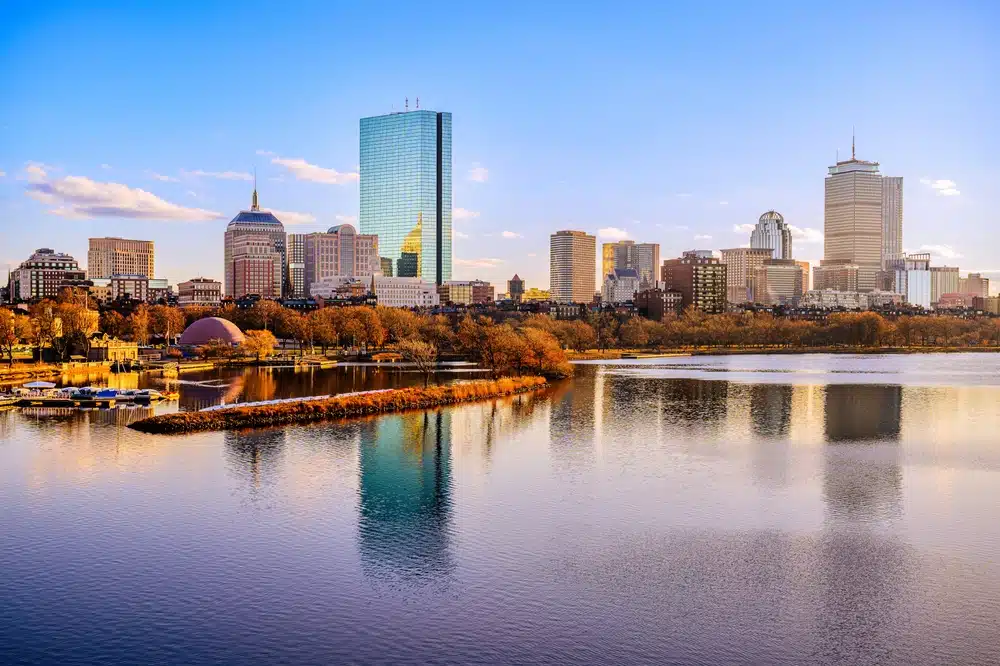
A therapy practice in Boston’s Back Bay came to us for SEO services after watching six months of organic traffic disappear. They had some of the most qualified therapists in the region working out of a Newbury Street office. Licensed professionals with decades of experience. The kind of credentials that should make Google very happy.
But six months earlier, they had hired someone to redesign their website. And their organic traffic dropped to a fraction of what it had been.
Money pages that had ranked in the top 3 for years were now sitting on page 3. The phone wasn’t ringing like it used to. New patient inquiries had dried up. And in a market where they’re competing against practices affiliated with McLean Hospital, Mass General, and Brigham and Women’s, losing visibility means those competitors fill the gap immediately. Six months of watching it get worse and not knowing how to fix it.
When I ran the technical audit, it became clear this wasn’t just a redesign problem. It was a cascade of failures. The redesign was the final blow, but the bleeding had actually started earlier when Google’s Helpful Content Update hit. The site had published a lot of content over the years, and some of it had ventured too far from the practice’s core topic. Google’s intent signals got muddied. Then the redesign launched without any SEO consideration, and that’s what finished it off. On top of all that, the site was getting hammered with toxic spam links and DDoS attacks.
I’ve watched this happen to businesses across every industry for over 13+ years of doing Search Engine Optimization. A business hires a developer to rebuild their site, and their Google visibility disappears. It’s one of the most common and most preventable problems in digital marketing. And in a competitive market like Boston, where the concentration of healthcare practices in the Longwood Medical Area alone creates brutal competition, losing your rankings means you’re invisible.
This article breaks down exactly what goes wrong, how to tell if it happened to you, and how we recovered this client’s traffic by 45.2% in 90 days. If your website traffic dropped after a redesign, this is the playbook.
The problems weren’t hard to find. They were everywhere.
Zero E-E-A-T signals. This was the biggest one. Despite employing licensed therapists with decades of clinical experience, Google had absolutely no way to recognize their expertise. No Person Schema. No author credentials linked to content. Nothing telling Google that real, qualified professionals were behind the information on the site. For healthcare and mental health websites operating in Boston, where you’re competing against practices with Harvard Medical School affiliations and research hospital credentials, this is critical. Google holds these YMYL (Your Money or Your Life) sites to a much higher standard of scrutiny. If you can’t prove who you are and what you’re trained to do, Google has no reason to trust your content over a competitor affiliated with Partners HealthCare who does.
Duplicate metadata on every page. Every page had either duplicate or poorly templated title tags and meta descriptions. Search engines couldn’t differentiate one page from another. When Google can’t understand what a page is specifically about, it doesn’t know which queries to rank it for. The pages were essentially competing against each other.
No Schema Markup at all. Service pages, location pages, practitioner pages. None of them had structured data. No LocalBusiness Schema telling Google where the practice was located. No Service Schema clarifying what they offered. The site was invisible to Google’s deeper understanding of entities and relationships.
Broken internal linking. This one was severe. A third of the site’s pages had one or fewer internal links pointing to them. The practice had hundreds of articles, but there were no topical connections between them. No links funneling authority from informational content to the service pages that actually generate leads. The site architecture was full of dead ends.
No alt text on images. Every image on the site was missing descriptive alt text. This hurts both accessibility compliance and image search visibility.
Toxic backlink profile. Spammy links from questionable sources were actively triggering spam filters and dragging down domain authority.
Any one of these issues would have hurt their rankings. All of them together? That’s how a site goes from page 1 to page 3 in a matter of months.
The Back Bay therapy practice isn’t unique. I’ve audited sites across healthcare in the Longwood Medical Area, law firms in the Financial District, e-commerce companies in the Seaport, and professional services firms in Cambridge that all hit the same problems after a rebuild. Here are the seven issues I see most often.
This is the number one killer. When your URL structure changes during a redesign and the old URLs aren’t properly redirected to the new ones using 301 redirects, every old URL returns a 404 error. Google can’t find your pages. All the ranking authority that those URLs had built up over months or years just evaporates. The link equity, the backlinks pointing to those pages, and the keyword positions. Gone.
I’ve seen businesses with 200+ pages of indexed content launch a redesigned site with a completely new URL structure and zero redirects in place. Overnight, Google sees 200 pages that no longer exist. The traffic impact is immediate and devastating.
During a redesign, title tags and meta descriptions often get overwritten with generic templates, auto-generated defaults, or deleted entirely. Every page ends up with the same metadata, or worse, no metadata at all.
This is exactly what happened to the Back Bay therapy client. Google relies on title tags and meta descriptions to understand what each page is about and how to differentiate it from other pages on the same site. When every page looks the same to Google, none of them rank well.
Pages that ranked well had their content removed, shortened, or completely rewritten without any keyword strategy in mind. Google reindexes the page, sees that the content it was ranking for is gone, and drops the page from its positions.
Blog posts are especially vulnerable to this. If your site had 100 articles driving organic traffic and the redesign removed or broke 30 of them, that’s potentially 30% of your organic traffic gone immediately. I always tell clients: content that ranks is an asset. Treat it like one.
Internal links do two critical things. They distribute link equity across your site, and they help Google understand how your pages relate to each other topically. A redesign that rebuilds navigation, changes page hierarchy, or restructures categories can sever all of those connections.
With the Back Bay client, a third of the site’s pages had one or fewer internal links. Hundreds of articles floating in isolation with no topical connections to reinforce the practice’s authority. Rebuilding those connections was one of the most impactful parts of the recovery.
If the old site had structured data and the new site doesn’t, you lose rich result eligibility and the machine-readable context that helps Google understand your business. For YMYL industries like healthcare, therapy, and legal services operating in Boston’s competitive landscape, losing Person Schema and credential signals is especially damaging because Google puts extra weight on those trust signals when deciding who to rank.
New designs often come with heavy imagery, animations, custom fonts, and bloated code that load slower than the old site. Google’s Core Web Vitals, specifically Largest Contentful Paint (LCP), Interaction to Next Paint (INP), and Cumulative Layout Shift (CLS), directly impact rankings.
As page load time goes from 1 to 3 seconds, the probability of a mobile visitor bouncing increases by 32%. Source – Think With Google
With mobile traffic accounting for over 60% of visits on most websites, a slower mobile experience after a redesign can tank your traffic even if everything else was done correctly.
This one drives me crazy because it’s so preventable. Developers build on a staging environment and add noindex tags or robots.txt rules to keep Google from crawling the work-in-progress. The site launches, and nobody removes them. Google literally cannot see your website.
I’ve encountered this more times than I should have. It’s the kind of thing that takes 30 seconds to fix but can cost months of lost traffic if nobody catches it.
Before you call anyone, there are a few things you can look at yourself to get a sense of what happened.
Google Search Console. Log in and check the Coverage report. Are there new 404 errors? Pages that were indexed before but aren’t now? Look at the Performance report and compare the period after the redesign to the same period before. Are impressions and clicks down across the board, or is it specific pages?
Google Analytics 4. Compare organic traffic for the 3 months before the redesign to the 3 months after. Look at which specific pages lost the most traffic. These are your highest-priority recovery targets.
Check for 404 errors. Use a free tool like Screaming Frog or even just Google Search Console’s Coverage report. If old URLs are returning 404 errors instead of redirecting to the new URLs, that’s almost certainly a major factor.
Verify robots.txt. Go to yourdomain.com/robots.txt in a browser. Make sure it’s not blocking Googlebot from crawling your site. You’d be surprised how often this is the culprit.
Check your metadata. View the source code on your key pages. Do they have unique, descriptive title tags and meta descriptions? Or are they blank, duplicated, or auto-generated?
If you find problems in more than two or three of these areas, the issue is systemic, and you need a full technical SEO audit. The longer the site sits broken, the harder the recovery becomes because Google starts to forget what your pages used to rank for, and competitors are actively filling the gap you left behind.
The recovery for the Boston therapy practice in Back Bay was systematic. Every fix was prioritized by impact. We didn’t do one thing and hope for the best. We addressed every issue the audit uncovered and executed the full strategy within 90 days.
E-E-A-T Enhancement. I created advanced Person Schema for each therapist on the team. Credentials, specializations, professional affiliations, degrees, licenses. Everything Google needs to see to recognize that real, qualified experts are behind the content. For healthcare and mental health sites competing in Boston’s market, where institutional affiliations carry significant weight, this is one of the single most impactful things you can do. Google holds these sites to a higher level of scrutiny, and the more you reinforce who you are and what you’re trained to do, the more Google trusts your content.
Metadata Architecture Overhaul. I rewrote every title tag and meta description on the site with unique, keyword-optimized content that clearly communicated the purpose of each page. No more duplicate signals. Each page had its own identity in Google’s eyes.
Advanced Schema Implementation. I wrote long, entity-rich Schema Markup for the top-performing pages. LocalBusiness Schema to clarify location and service area. Service Schema for each offering. Person Schema for each practitioner with their full credentials. This made the entire site machine-readable and eligible for rich snippets in search results.
Strategic Internal Linking. I ran a Power Page analysis to identify the site’s highest-authority content, then built an internal linking structure that funneled link equity from those pages to the conversion-focused service pages. Every link had strategic intent. No random “related posts” widgets. Deliberate, topically relevant connections between pages.
Technical Optimization. Descriptive alt text added to every image. Homepage optimized for primary service keywords. Crawlability improvements across the entire site.
Backlink Cleanup. Identified the toxic backlinks that were triggering spam filters and submitted a disavow file to Google to remove their negative influence on domain authority.
The results over 90 days:
Individual pages saw even more dramatic recoveries. One high-value article jumped 18 positions with a 1,267% increase in clicks. Another climbed 16 positions with an 87% click increase. These weren’t minor improvements. These were pages that went from buried to visible.
If you’re planning a website redesign or you’ve already been through a bad one and need to do it right this time, here’s what the process should look like.
Full SEO audit before the redesign starts. You need to know what’s currently working. Which pages drive the most organic traffic? Which keywords do you rank for? What does your current link structure look like? This is the baseline you’re protecting.
Complete URL mapping and redirect plan. Every old URL that’s changing needs a corresponding 301 redirect to the new URL. Every single one. This is non-negotiable.
Content inventory. What stays, what goes, what gets rewritten. Pages that rank should be treated as assets. If the content needs to change, it needs to be rewritten with the existing keyword strategy in mind, not from scratch with no SEO consideration.
Metadata migration plan. Title tags and meta descriptions should be carried forward or improved. Never wiped and left blank.
Schema Markup carried forward or improved. If the old site had structured data, the new site needs it too. If it didn’t, this is the perfect time to add it.
Pre-launch testing. Test across devices, browsers, and screen sizes. Check page speed. Verify redirects work. Make sure robots.txt isn’t blocking anything.
Post-launch SEO audit within 30 days. After launch, run a full crawl. Check Google Search Console for new errors. Compare traffic week by week. Catch problems early before they compound.
This is why our web design process starts with deep discovery before a single pixel gets designed.
83% of web design projects with discovery phases succeed versus only 52% without discovery.
A redesign done right isn’t just a new look. It’s an SEO-informed rebuild that protects your existing authority while improving the user experience and conversion rate. We’ve seen what happens when that’s done well, too. A DTC e-commerce client went through a CRO audit and redesign with us and saw a 311% increase in conversion rate, 559% more purchases, and 440% year-over-year revenue growth. The same traffic is turning into dramatically more sales because the site was built to convert.
–
Boston is one of the most competitive SEO markets in the country. The density of high-authority businesses across healthcare, B2B Manufacturing, legal, professional services, and tech means that when you lose rankings, the gap gets filled immediately.
In the Longwood Medical Area alone, you’re competing against practices associated with Dana-Farber Cancer Institute, Boston Children’s Hospital, Beth Israel Deaconess, and Brigham and Women’s Hospital. In the Financial District and Downtown Crossing, law firms and financial services companies have been building domain authority for decades. In Kendall Square and the Seaport District, biotech startups and SaaS companies flush with venture capital are investing heavily in organic search. Cambridge has its own competitive ecosystem driven by MIT, Harvard, and the concentration of research institutions along the Red Line.
When your redesign knocks you off page 1 in a market this dense, the businesses that replace you aren’t amateurs. They have strong sites, strong authority, institutional backing, and they’re not going to move out of the way easily. Every week you wait, recovery gets harder because competitors are actively reinforcing the positions they took from you.
42% of all local search clicks go to the top 3 results, and 29% of those go to the first Google Map Pack result.
If you dropped out of those top positions after a redesign, you’re not just losing a little traffic. You’re losing the majority of the clicks for your most important keywords. In a market like Boston, where customer acquisition costs are already high due to competition and commercial real estate expenses, that translates to real revenue impact.
Boston’s audience is also tech-savvy and has high expectations for website performance. The concentration of educated professionals, research scientists, and tech workers means visitors notice when a site is slow, broken, or poorly designed. First impressions happen in milliseconds, and if your redesigned site doesn’t perform, visitors will bounce to a competitor who invests in their web presence.
The good news is that recovery is possible, even in a market this competitive. Struggling with choosing from the best Boston SEO companies? Read my honest guide to the best SEO’s in Boston.
Radiant Elephant is based in Northampton, Massachusetts, about 90 miles west of Boston. We’ve been serving Boston-area clients for years because the technical work we do, SEO audits, Schema implementation, site architecture, and conversion optimization, doesn’t require us to be in the same city. What it requires is deep expertise in how Google evaluates sites and the ability to execute recovery strategies systematically.
The Back Bay therapy practice is one example. We’ve also worked with professional services firms in the Financial District, healthcare practices in Brookline, and e-commerce companies shipping nationwide from the Seaport. The geographic distance doesn’t matter when the work is technical, and the results are measurable.
Every SEO recovery project is handled personally by me, Gabriel Bertolo. Not a junior analyst. Not an outsourced team. I run the audit, I write the schema, I build the linking strategy, and I oversee the implementation. That’s how we maintain a 98.5% client retention rate and average client relationships of over 6 years.
I also handle the website redesign itself if that’s what’s needed. Sometimes recovery means fixing the technical SEO on the existing site. Sometimes it means doing the redesign properly from scratch. Either way, you’re working with one person who understands both sides, the SEO and the design, and how they need to work together.
If your rankings dropped after a redesign and you’re not sure how to recover, our Boston SEO team can audit what broke and rebuild it, schedule a free strategy call. I’ll take a look and tell you straight.

Gabriel Bertolo is a 3rd generation entrepreneur who founded Radiant Elephant over 13 years ago after working for various advertising and marketing agencies.
He is also an award-winning Jazz/Funk drummer and composer, as well as a visual artist.
His Web Design, SEO, and Marketing insights have been quoted in Forbes, Business Insider, Hubspot, Entrepreneur, Shopify, MECLABS, and more.
Check out some publications he's been quoted in:
Quoted in HubSpot's AI Search Visibility Article and HubSpot's Article on 6 Best Wix Alternatives
Quoted in DesignRush Dental Marketing Guide
Quoted in MECLABS
Quoted in DataBox Website Optimization Article and DataBox Best SEO Blogs
Quoted in Seoptimer
Quoted in Shopify Blog