The Complete Guide to SEO for Northampton & Pioneer Valley Businesses
Written by Gabriel Bertolo
November 11, 2026
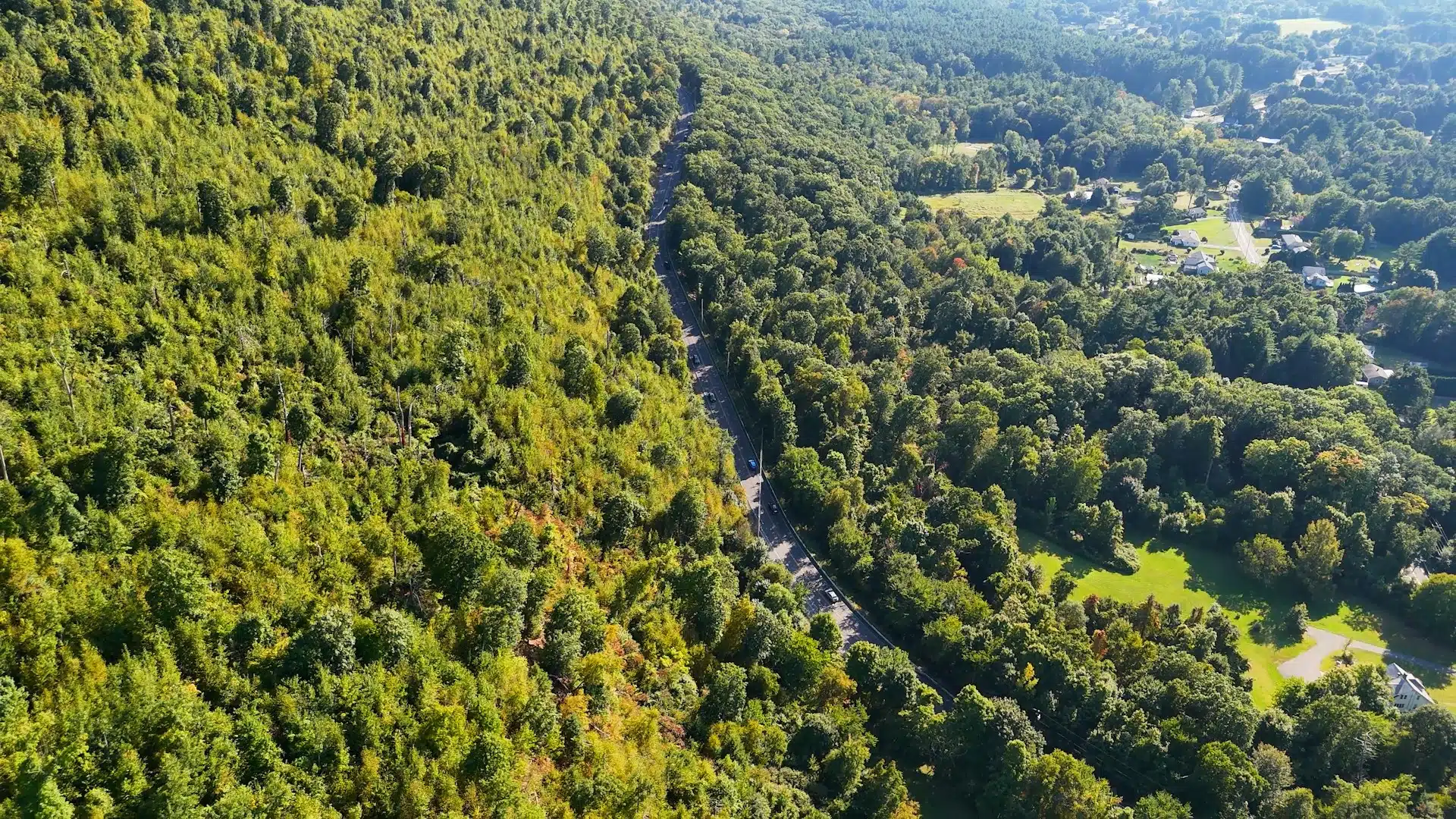
We’ve run our agency out of an office on State Street in Northampton for years, a few blocks from Thornes and the stretch of Main Street that gives this town its character. We work with businesses up and down the Pioneer Valley, Northampton, Amherst, Easthampton, Hadley, Springfield, and the hill towns most marketing companies couldn’t find on a map. So this isn’t a generic “local SEO” template with a city name dropped into the blanks. It’s how search actually behaves in this specific market, written by people who live in it.
If you run a Valley business and you’re not showing up when locals search, here’s the playbook to fix it. I’ll tell you plainly what you can do yourself and where it’s worth bringing in help.
The Valley is a dense, loyal, local-first market, and that loyalty is real; people here genuinely want to spend their money close to home. But they still start on their phones. When someone needs a dentist in Northampton, a landscaper in Amherst, or a dispensary nearby, the modern version of asking a neighbor is a search, a map, and more and more an AI answer. If you’re not visible in that moment, the customer who would have become a regular never learns you exist. That’s the part that frustrates me most about watching good Valley businesses stay invisible: it’s rarely that they’re worse; it’s that they’re unfindable.
Here’s the number that reframes the whole thing: roughly 43% of local searchers end up hiring one of the businesses in the top three Google Maps results. Not the top ten. The top three. In this market, local visibility isn’t a nice-to-have. It’s the difference between a full calendar and a quiet one.
Local SEO here comes down to four things working as one system. A weak link in any of them drags the rest down.
Let’s take them in order.
The Valley businesses that win organic search do three things well.
They carry real location relevance on the page. Not “Northampton SEO Northampton” jammed into a footer, but honest signals: your service area named naturally, local landmarks and neighborhoods where they fit, content that reads like you actually operate here. If you serve several Valley towns, each one earns its own genuine page rather than one thin page straining to rank everywhere at once. We walk through that town-by-town approach in our guide to getting found in NoHo and the greater Northampton area.
They answer the questions local customers really ask. “Do I need a permit for a deck in Northampton?” “When’s the right planting window for our zone?” The business whose page answers the real question earns the visit and the trust that comes with it. This is the moment a blog stops being a chore and becomes a lead source.
They sit on a technically sound site. Fast, mobile-first, cleanly structured. You don’t need to be an engineer, but a slow or broken site quietly caps everything above it. If the site is the bottleneck, that’s a Northampton web design problem before it’s an SEO problem.
For a local business, your Google Business Profile does more work than your entire website. It fills the map, feeds the “near me” results, and increasingly feeds the AI answers too.
The fundamentals that actually change your visibility:
The way we show clients where they truly stand is grid tracking: mapping your rank for each keyword across dozens of points around your service area, so you see the real geographic shape of your visibility instead of one flattering average. Here’s a real example of what that turnaround looks like, a dental practice we worked with went from 14% map visibility to 83%, and from zero three-pack presence to 100% coverage, in about 30 days. The full method is in our guide on how to rank your business in Google Maps, and you can pull a free Google Maps ranking grid report to see where you stand today.
Reviews do two jobs at once. They persuade the human choosing between you and a competitor, and they validate your business to the algorithms and AI engines deciding whether to surface you at all.
A few things that matter more than most owners realize:
More Valley customers every month are skipping the map and simply asking ChatGPT or Google’s AI “who’s the best X near me” or “recommend a Y in Northampton.” Those answers name a small handful of businesses, with nothing underneath. Being one of the named few is the new top three.
The encouraging part: the work that wins AI answers is the same entity work that wins everything else in this guide: consistency, a strong profile, specific reviews, local mentions. We wrote a full companion piece on exactly how local businesses earn those mentions, GEO for local businesses, and it pairs directly with this one. For a Valley business, getting the local fundamentals right is most of the AI battle already behind you. And because our market is far less crowded than Boston or New York, there’s a genuine first-mover edge available here right now.
Local SEO isn’t one-size-fits-all, and the Valley’s economy has some distinct players:
The pillars don’t change. The emphasis shifts by industry.
A fair amount of this you can start on your own, today. Claim and complete your Google Business Profile, ask every genuinely happy customer for a specific review, and make your name, address, and phone identical everywhere they appear. That alone will put you ahead of a surprising number of Valley competitors who never bothered.
Where it becomes worth bringing in help is the connected strategy, the town-by-town pages, the grid tracking, the local link and citation building, the technical foundation, and now the AI visibility work, run as one coherent system instead of a pile of scattered tactics. As a third-generation entrepreneur, I’ll admit I’m biased toward the long view here: the point isn’t to game a ranking this month; it’s to make your business the durable, obvious answer in its market. That’s the difference between occasionally surfacing and genuinely owning your corner of the Valley.
If you want a straight read on where you stand in Valley search, reach out, and we’ll take a look. We’re a Northampton SEO company by address and by temperament, and we’d far rather help a Valley business get this right than watch a national agency phone it in from a thousand miles away. We do this across the rest of Western Massachusetts too. Here’s our broader Massachusetts SEO work.
How much does local SEO cost for a Northampton or Pioneer Valley business? It varies with your market’s competitiveness and how much groundwork is already in place, but local SEO for a Valley business is generally one of the highest-ROI investments available because the competition is less sophisticated than in a major metro. The more useful question than price is return: a cheap effort that produces nothing is expensive, and a focused one that fills your calendar pays for itself.
How long does local SEO take to work in the Valley? Google Business Profile improvements and review momentum can show movement within a month or two. Organic rankings and local authority build over a few months. Because the Valley market is less saturated than Boston, results often come faster here than the national averages you’ll read about.
Do I need separate pages for each Valley town I serve? If you genuinely serve multiple towns, yes, a clearly written page per town beats one thin page trying to rank for all of them. Each page should reflect real service in that place, not just a swapped-in town name.
Can a small Valley business really compete in Google Maps? Yes, and often more easily than in a big city. Local map rankings reward proximity, a strong profile, and genuine reviews, all of which a focused small business can win. The businesses that lose are usually the ones that never claimed or completed their profile, not the ones that were outspent.
What about AI search, is it worth worrying about for a local business? It’s worth getting ahead of now. More local customers are using AI to get recommendations every month; those answers name only a few businesses, and the Valley market is uncrowded enough that early movers have a real edge. The work overlaps almost entirely with local SEO, so you’re not starting a separate project.


Gabriel Bertolo is a 3rd generation entrepreneur who founded Radiant Elephant over 13 years ago after working for various advertising and marketing agencies.
He is also an award-winning Jazz/Funk drummer and composer, as well as a visual artist.
His Web Design, SEO, and Marketing insights have been quoted in Forbes, Business Insider, Hubspot, Entrepreneur, Shopify, MECLABS, and more.
Check out some publications he's been quoted in:
Quoted in HubSpot's AI Search Visibility Article and HubSpot's Article on 6 Best Wix Alternatives
Quoted in DesignRush Dental Marketing Guide
Quoted in MECLABS
Quoted in DataBox Website Optimization Article and DataBox Best SEO Blogs
Quoted in Seoptimer
Quoted in Shopify Blog