Entity Optimization for Increased AI Search Visibility
Written by Gabriel Bertolo
July 14, 2026
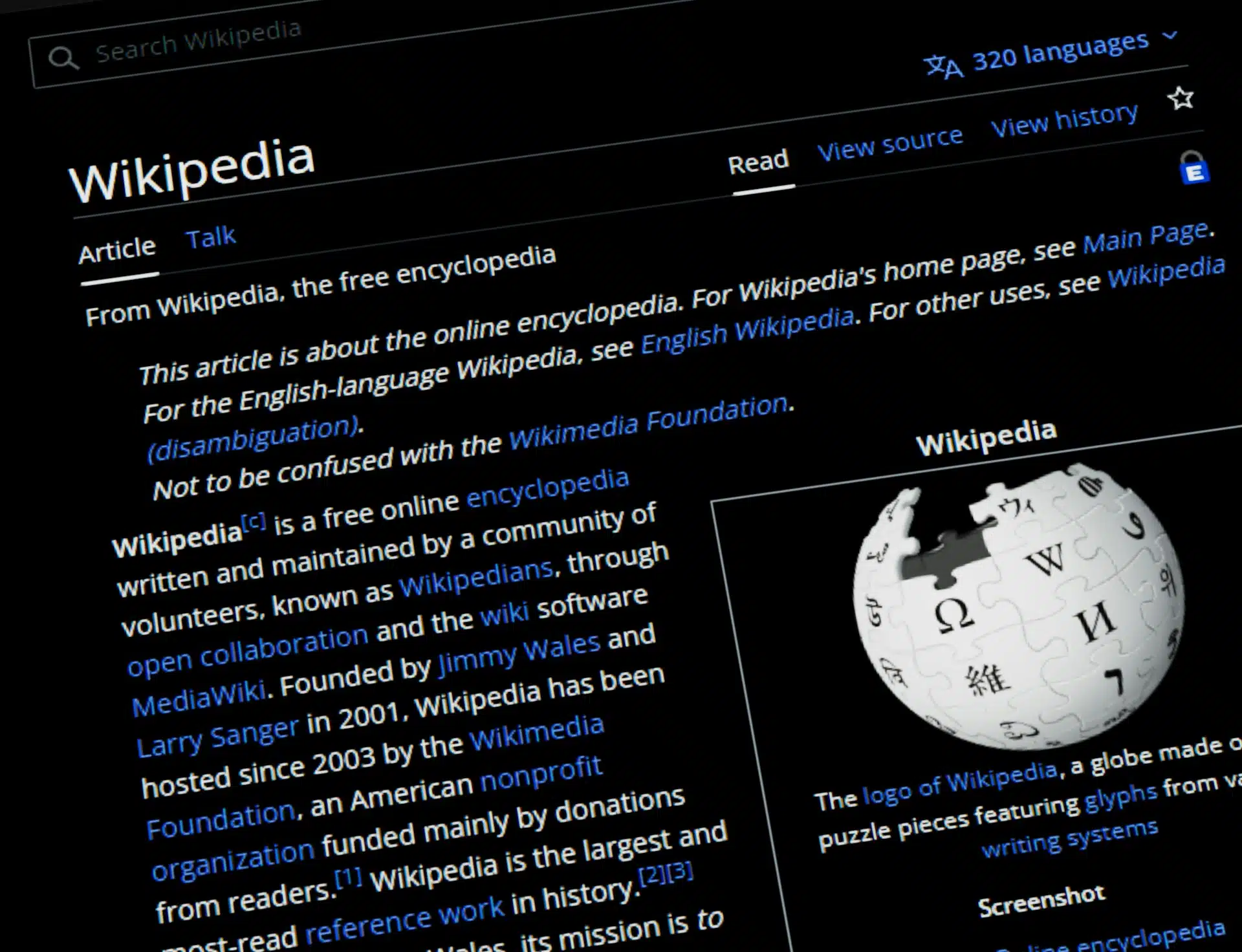
Wikipedia accounts for 7.8% of all ChatGPT citations. That single domain represents nearly half (47.9%) of ChatGPT’s top-10 cited sources. Across virtually every major LLM, Wikipedia sits at #1 or #2 for citation frequency.
But this article isn’t about Wikipedia as a citation source. It’s about something more fundamental: how AI systems decide whether your brand is a real, recognizable entity before they ever evaluate your content.
At Radiant Elephant, entity optimization is one of the first things we audit when building a generative engine optimization program for a client. Not because it’s the flashiest tactic. Because it’s the layer everything else depends on.
I covered entity optimization as one of 15 proven tactics in the research review ranking every GEO tactic by evidence strength. This article goes deeper on the mechanism, the data, and how to implement it step by step.
Here’s how retrieval-augmented generation actually works under the hood. Before an AI system evaluates whether your content is good enough to cite, it evaluates whether it understands what entity your content represents.
Is this page from a real company? Is this author a real person with verifiable credentials? Does this brand exist as a recognized entity in the knowledge graph?
If the answer is unclear, your content doesn’t get past the first filter. Entity confidence precedes content quality evaluation in RAG pipelines. Which means the most well-written, data-rich page on the internet won’t get cited if the AI can’t confidently identify who published it.
This is the foundation that makes other tactics work. You can pack your pages with statistics and expert quotations. You can build strong E-E-A-T signals for every author. But if your entity isn’t resolved in the AI’s knowledge base, those signals never get evaluated.
Wikipedia content makes up approximately 3% of GPT-3’s training data and appears in virtually every major LLM training dataset. When ChatGPT “knows” about a company, a person, or a concept, that knowledge frequently originates from Wikipedia.
Academic RAG systems like REALM and DPR explicitly use Wikipedia as a retrieval source because it demonstrably reduces hallucinations. When an AI system can cross-reference a claim against a Wikipedia entry, it gains confidence in that claim. When it can’t, it hedges or omits.
This creates a straightforward reality. If your brand has a Wikipedia article, AI systems can verify your existence, your industry, your leadership, and your notable accomplishments before they evaluate your content. If your brand doesn’t have one, the AI has to work harder to figure out who you are. And frequently decides not to bother.
Schema App published a controlled case study isolating the effect of sameAs entity linking. After adding sameAs properties to location pages (connecting them to Wikipedia, Wikidata, and Google Knowledge Graph entities), they measured:
The sameAs property functions as an “entity canonical.” Just like a canonical URL tells Google “this is the authoritative version of this page,” a sameAs link tells AI systems “this is the real-world entity this page refers to.” It disambiguates your brand from every other entity with a similar name and strengthens entity confidence in RAG retrieval.
This is the connection between entity optimization and schema markup implementation. sameAs is a schema property, but its function is entity resolution, not content markup. It sits at the intersection of both tactics.
Wikipedia has strict notability requirements. Your brand needs significant independent media coverage from reliable sources to qualify. Many businesses, especially mid-market companies, don’t meet that bar.
Wikidata is different. It’s a structured data knowledge base where verifiable facts can be added without meeting Wikipedia’s notability standards. And it powers knowledge panels in both Google and Bing, feeding directly into the entity-understanding systems AI search relies on.
A London School of Economics experiment tested the impact of integrating thesis records into Wikidata. Result: a 47% increase in downloads and traffic from Wikipedia doubled. Not from adding content to Wikipedia itself. From making entities more discoverable through Wikidata’s structured data.
Google Knowledge Graph contains 800 billion facts about 8 billion entities. Entity confidence is a ranking input that sits upstream of everything else in RAG pipelines. Getting your brand registered as a verified entity in Wikidata feeds this system directly.
It’s not the same as having a Wikipedia article. But it’s a meaningful step toward being recognized by AI as a real, disambiguated entity.
In our GEO case study, entity optimization was part of the foundation we built before any content strategy. The client’s DR was 21 at kickoff. They were competing against Fortune 500 brands with fully developed entity profiles, Wikipedia articles, and decades of brand mentions across third-party sources.
We built the entity layer first: Wikidata entry, Organization schema with complete sameAs linking, Person schema for key personnel. Then we layered content optimization on top. The entity work didn’t produce citations on its own. But without it, the content work wouldn’t have produced them either.
The result: 283 AI citations across platforms in seven months. DR 21 to 35. A manufacturer with a fraction of the budget outranking FDA.gov in AI search.
Step 1: Audit your Wikipedia article (Day 1). If you have one, check it for accuracy, neutrality, and citation quality. Do not edit your own page. Wikipedia’s conflict of interest policy is enforced, and self-editing gets reverted and flagged. If you find errors, use the talk page or bring in a qualified Wikipedia editor.
Step 2: Create or verify your Wikidata entry (Day 1, ~45 minutes). Search for your brand on wikidata.org. If an entry exists, verify the data is accurate and complete. If it doesn’t, create one with verifiable facts: founding date, headquarters location, industry, official website. Properties to add: instance of (appropriate category), founded, headquarters, official website URL. You can do this yourself.
Step 3: Implement Organization schema with @id and sameAs (Day 1-2). Your Organization schema should include a unique @id (typically your homepage URL with a #organization fragment) and at minimum three sameAs links: Wikipedia (if applicable), Wikidata, LinkedIn, and Crunchbase. Use the @graph technique if you need to connect multiple entities.
Step 4: Add Person schema for key authors and experts (Week 1). Every named author on your site should have Person schema with jobTitle, worksFor (linking to the Organization @id), knowsAbout, and sameAs linking to LinkedIn, institutional pages, and any Wikipedia entries.
Step 5: Build toward Wikipedia eligibility if you don’t have an article (Months 1-6). Qualifying media coverage comes first. Get written about in publications Wikipedia considers reliable sources. After accumulating 3-5 substantial, independent sources, engage a qualified Wikipedia editor (not yourself, not your marketing team) to draft an article.
The firm doesn’t meet Wikipedia’s notability requirements. No Wikidata entry. Basic schema.
Implementation: Create a Wikidata entry with founding year, location, and practice areas (45 minutes). Implement Organization schema as LegalService type with @id, foundingDate, and sameAs links to Wikidata, LinkedIn, Avvo, BBB, and Google Maps. Add Person schema for every attorney with jobTitle, worksFor linking to the Organization @id, knowsAbout listing practice areas, and sameAs linking to LinkedIn, state bar association profiles, and Avvo profiles. Build toward Wikipedia eligibility through local media coverage.
Timeline: Wikidata and schema in week 1. Wikipedia eligibility: 6-12 months of media coverage building.
The brand has TechCrunch, Business Insider, and Forbes coverage. Qualifies for a Wikipedia article but doesn’t have one. Competitors do.
Implementation: Commission a Wikipedia article from a qualified editor (not the marketing team). Provide all independent reliable source links. The editor drafts following neutral point of view policy. Typical timeline: 2-4 weeks. Create comprehensive Wikidata entry with founder, products, revenue range, social profiles. Update Organization schema with sameAs links to Wikipedia, Wikidata, LinkedIn, Crunchbase, and all social profiles. Link founder’s Person schema to their entity records.
Expected impact: The Wikipedia article alone typically produces measurable ChatGPT citation increases within 2-4 weeks of publication.
Well-known in their niche. Frequent conference speaker. No Wikipedia article (doesn’t meet individual notability). No Wikidata entry.
Implementation: Create Wikidata entry for the individual with occupation, employer/affiliation, education, notable work. Implement Person schema with jobTitle, knowsAbout, and sameAs linking to LinkedIn, ORCID (if they publish research), personal website. Ensure cross-platform consistency: LinkedIn headline, website bio, conference speaker profiles, and schema all match exactly. Build entity connections through bylined articles, conference speaking, and directory listings.
Timeline: Wikidata and schema in day 1. Entity signal strengthening: ongoing over 3-6 months.
Large hospital system with 6 locations. Has a Wikipedia article, but it’s three paragraphs with minimal citations. Schema is incomplete.
Implementation: Engage a qualified Wikipedia editor to expand the article with independently sourced sections on history, notable programs, research affiliations, and community initiatives. Each claim sourced to an independent publication. Create linked Wikidata entries for each location with bed count, emergency department status, and founding date. Implement @graph schema connecting parent organization, each location, and key physicians. Physician Person schema includes medicalSpecialty, hasCredential (board certifications), and sameAs to Healthgrades, Doximity, and PubMed profiles.
Expected impact: A well-developed Wikipedia article with 15-20 independent citations carries dramatically more entity weight than a three-paragraph stub with 3 citations. Health queries face the highest E-E-A-T bar.
Series A startup, 3 years old. No Wikipedia article, no Wikidata entry, minimal schema.
6-month roadmap: Month 1: Create Wikidata entry, implement Organization schema with sameAs to Wikidata, LinkedIn, Crunchbase, AngelList. Person schema for founders. Month 2: Publish original research, pitch findings to industry media. CEO LinkedIn articles establishing expertise. Apply for industry awards. Months 3-4: Secure 2-3 media placements in publications that qualify as Wikipedia reliable sources (TechCrunch, VentureBeat, industry-specific publications). Get listed in analyst reports. Month 5: Evaluate Wikipedia notability. If qualifying coverage exists, engage a Wikipedia editor. Month 6: Update all schema with Wikipedia sameAs link. Verify entity resolution across ChatGPT, Perplexity, and AI Overviews.
Entity optimization is infrastructure. It’s the plumbing that lets AI systems verify your existence and trust your content enough to cite it. Without it, every other tactic in this GEO cluster operates at a disadvantage. I mapped the full entity optimization process alongside all 15 evidence-backed GEO tactics.

Gabriel Bertolo is a 3rd generation entrepreneur who founded Radiant Elephant over 13 years ago after working for various advertising and marketing agencies.
He is also an award-winning Jazz/Funk drummer and composer, as well as a visual artist.
His Web Design, SEO, and Marketing insights have been quoted in Forbes, Business Insider, Hubspot, Entrepreneur, Shopify, MECLABS, and more.
Check out some publications he's been quoted in:
Quoted in HubSpot's AI Search Visibility Article and HubSpot's Article on 6 Best Wix Alternatives
Quoted in DesignRush Dental Marketing Guide
Quoted in MECLABS
Quoted in DataBox Website Optimization Article and DataBox Best SEO Blogs
Quoted in Seoptimer
Quoted in Shopify Blog